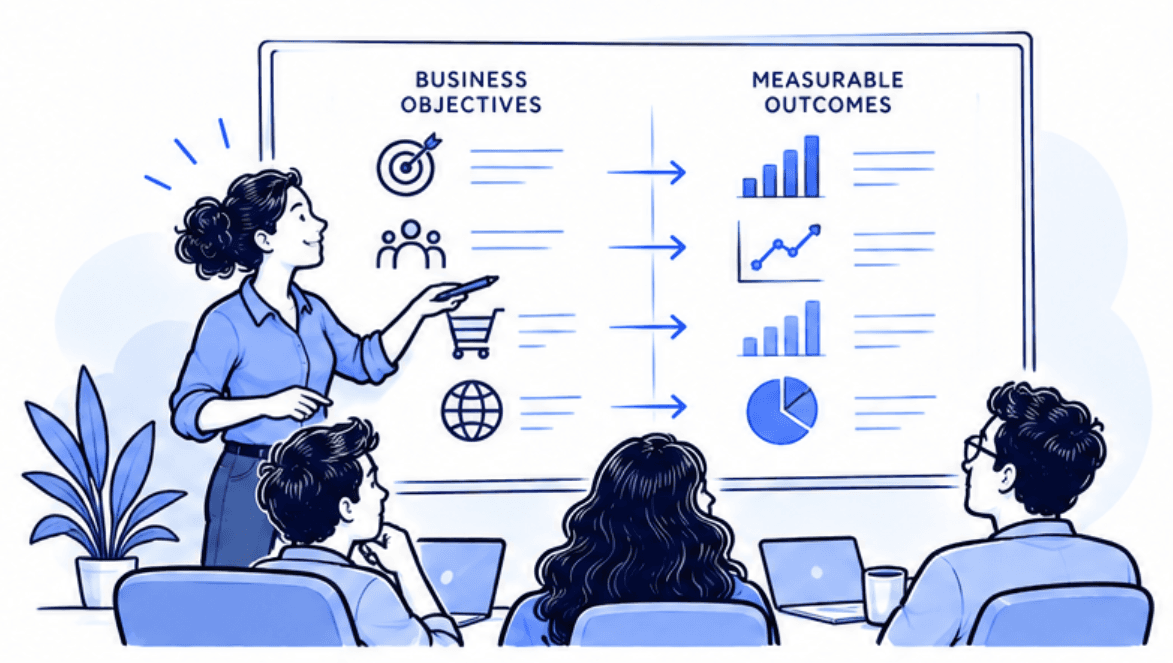
Step 1 · Plan
Map objectives to measurable outcomes
Start with what the business needs to achieve, then decide exactly how you'll know it's working. Every report, test and recommendation that follows traces back to these goals.
- Business goals turned into a short list of key metrics
- A measurement plan: what to track, where, and why
- Targets and benchmarks everyone agrees on
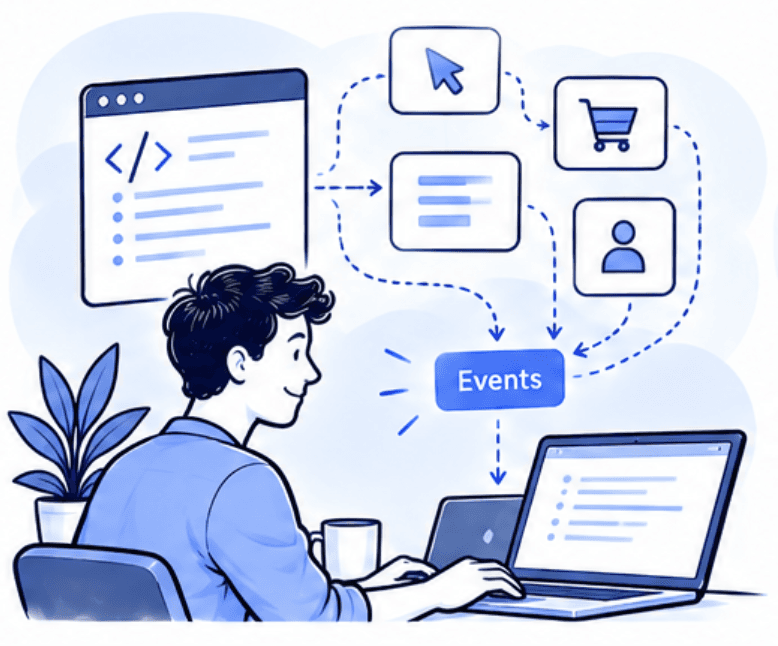
Step 2 · Build
Implement tracking
Capture the actions that matter, accurately and consistently, so the numbers can be trusted from day one.
- Tracking for the key user activities in your measurement plan
- Clean, consistent event names across tools
- Testing and documentation, so it keeps working after launch

Step 3 · See
Reporting & dashboards
Put the right numbers in front of the right people, in a form they'll actually use.
- Dashboards built around your objectives, not every available metric
- Regular reporting in plain language
- One version of the truth across teams
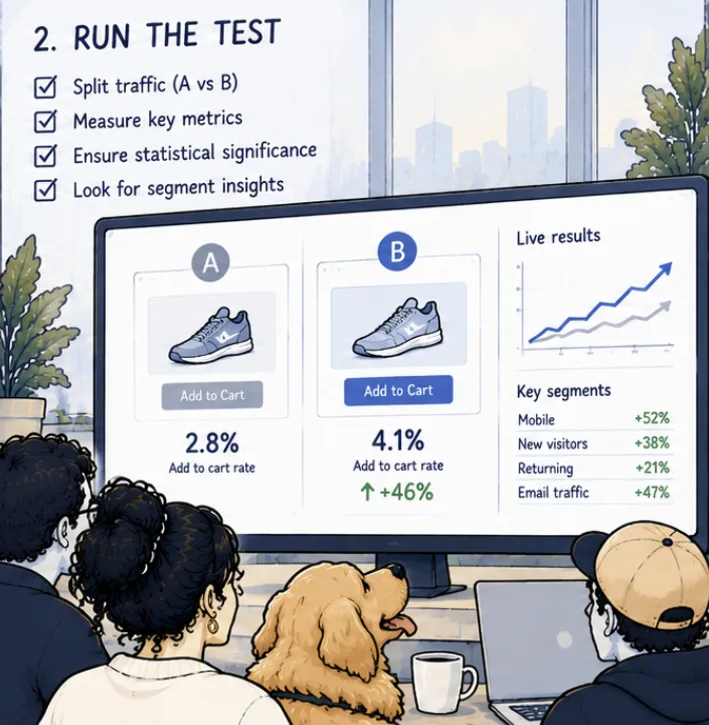
Step 4 · Improve
A|B testing & optimization
Turn ideas into tests, and tests into proven improvements.
- Test ideas prioritised by likely impact
- Experiments designed and checked for statistical significance
- Results broken down by segment, so you know who a change works for

Step 5 · Decide
Deep-dive analysis & communication
Answer the big questions, and share what the data means in a way that leads to decisions.
- In-depth analysis of the questions that matter most right now
- Clear findings and recommendations, not just charts
- Presentations and write-ups your whole team can act on
Let's find what's holding your store back
A short, direct conversation is usually enough to know whether I can help. No pitch, no obligation.
No agency. No overhead. Just a senior analyst who's done this 100+ times — and actually enjoys it.
Get in touch